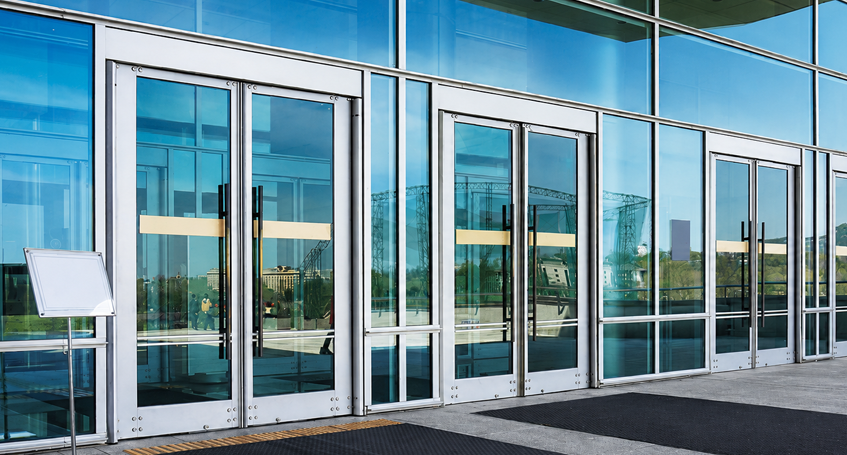
A commercial door can be structurally sound and still fail its building completely. The reason is almost always hardware.
Door closers lose their hydraulic tension after years of cycling open and closed hundreds of times a day. Panic bars wear at the push pad and the latch mechanism. Hinges develop play that throws the door out of alignment. Strikes and latches stop engaging cleanly because the frame has shifted, the hardware has worn, or both.
Most commercial entry problems that look like door problems are actually hardware problems. North Creek Commercial Glass services commercial door hardware and entry systems for office buildings, retail storefronts, shopping centers, medical facilities, industrial properties, and managed commercial portfolios throughout King, Snohomish, and Skagit Counties.
Entry hardware on a commercial building is a system, not a collection of individual parts. When one component starts to fail, it places added stress on everything connected to it.
Door Closers
The closer controls how a door returns to the frame after opening. When it loses calibration — closing too fast, too slow, or stopping short of the latch — it creates safety issues, ADA compliance concerns, and accelerated wear on hinges and strikes. We adjust, repair, and replace commercial closers including surface-mounted, concealed, and overhead units.
Panic Hardware & Exit Devices
Panic bars and exit devices are life-safety hardware governed by building and fire codes. A push pad that binds, a latch that doesn’t retract cleanly, or a device that fails to release under pressure is a code and liability issue — not just an inconvenience. We service and replace panic hardware on single doors, pairs, and fire-rated assemblies.
Hinges & Pivots
Commercial hinges carry the full weight of a door through thousands of open-close cycles. When they develop play, the door drops, drags, and eventually fails to align with the strike. We replace worn hinges and pivot sets without requiring full door or frame replacement in most cases.
Locks, Strikes & Latches
Deadbolts, cylindrical locks, mortise locks, and electric strikes all have mechanical components that wear with use. A latch that won’t retract, a strike misaligned from frame movement, or a lock cylinder that has become difficult to operate are all serviceable problems.
Handles, Pull Bars & Push Plates
Entry handles on commercial buildings take constant abuse. Loose, damaged, or missing hardware affects appearance, function, and in some cases ADA grip compliance.
Thresholds & Door Sweeps
Worn thresholds and door sweeps affect energy performance, weather sealing, and in some buildings, compliance with accessible design requirements. We replace both as part of entry system service.
✓ A worn closer causes the door to swing too hard — accelerating hinge wear
✓ Loose hinges let the door sag — pulling the strike out of alignment
✓ A misaligned strike causes the latch to fail — the door won’t secure
✓ A failing latch causes the closer to hold the door partially open — weather and security exposure
✓ Security exposure leads to forced entry attempts — hardware damage beyond normal wear
This is why evaluating the entry system as a whole — not just the component that is visibly failing — produces repairs that last.
Commercial entry hardware service is a recurring need for buildings with active daily use. We work with:
North Creek Commercial Glass serves businesses throughout King, Snohomish & Skagit Counties with commercial glass, commercial door, storefront, and emergency glass repair and replacement services.