A window that looks intact can still be failing. Fogged glass between panes means the insulated unit has lost its seal and is no longer providing the thermal performance it was designed for. A frame that has pulled from the surrounding wall is creating a pathway for air and moisture. A sill that retains water after rain is quietly deteriorating the surrounding structure.
Commercial buildings carry significant window surface area. In an office building, windows may account for the majority of the building envelope’s exposed surface. In a retail storefront, the windows are the building’s public face. In a medical facility, window performance directly affects interior climate control and energy cost. When window systems aren’t performing correctly, the consequences show up in energy bills, tenant comfort, building maintenance costs, and the condition of the surrounding structure.
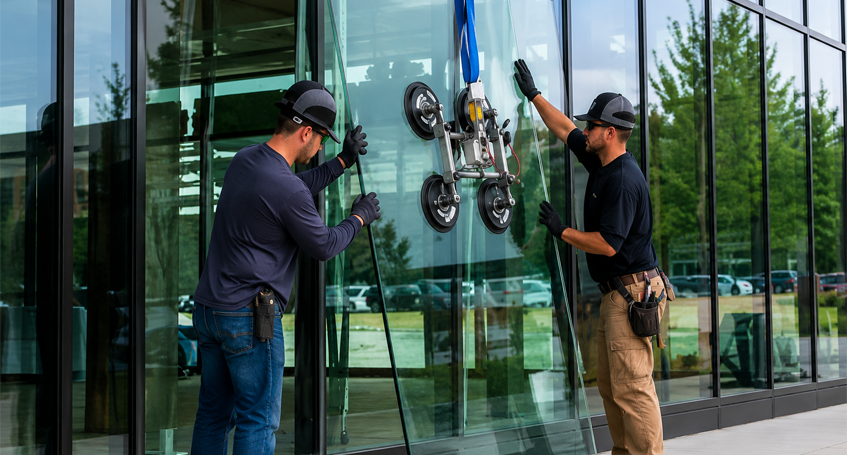
North Creek Commercial Glass provides commercial window repair and replacement for office buildings, retail centers, medical and healthcare facilities, industrial properties, and managed commercial portfolios throughout King, Snohomish, and Skagit Counties.
Window failures in commercial buildings rarely look dramatic — until they’ve been ignored long enough. The most common issues we see are:
When the seal of an insulated glass unit (IGU) fails, moisture enters between the panes, causing permanent fogging that cannot be cleaned away. In most cases, only the insulated glass unit needs replacement, while the existing frame can remain in place.
Air leaks around window frames, gaskets, or glazing reduce energy efficiency and increase HVAC costs. Prompt repairs help improve indoor comfort and reduce unnecessary energy loss.
Failed seals or deteriorated gaskets can allow water to enter around commercial windows, leading to mold, damaged drywall, insulation issues, and potential structural concerns if left unaddressed.
Worn hinges, cranks, locks, and other hardware can prevent commercial windows from operating properly. Repairing or replacing damaged components restores functionality, ventilation, and code compliance.
Cracked or damaged commercial glass should be replaced promptly, as cracks often expand over time due to temperature changes, impacting safety, appearance, and security.
✓ Fogged and failed insulated glass unit (IGU) replacement
✓ Single-pane commercial glass replacement
✓ Air infiltration and draft diagnosis and repair
✓ Window frame seal and perimeter caulking
✓ Operable window hardware repair and replacement
✓ Cracked and impact-damaged glass replacement
✓ Frame inspection and condition assessment
✓ Multi-unit window programs for managed properties
The most common question we field on commercial window service is whether to replace the glass unit only or the entire window assembly — frame and all.
In most commercial applications, the frame is the more expensive and more labor-intensive component. Aluminum commercial window frames are typically mechanically fastened into the surrounding wall assembly with clips, fasteners, and sealant perimeter — removing them means opening the surrounding wall. If the frame is structurally sound, thermally functional, and properly anchored, replacing only the IGU is almost always the right call. It restores the window’s thermal performance, eliminates the fogging, and costs a fraction of full window replacement.
Full window replacement makes sense when the frame has separated from the wall, when the thermal break in the frame has failed (producing condensation on the frame itself, not just the glass), when the frame profile is being upgraded for aesthetic or code reasons, or when the surrounding wall condition requires the frame to come out anyway.
We evaluate both the glass and the frame before making a recommendation — because recommending full replacement when glass-only is sufficient isn’t in the building’s interest.
Window condition affects tenant retention. Fogged windows, visible condensation, and drafty interiors are among the most common tenant-reported maintenance concerns in commercial office buildings. They’re also entirely preventable with timely service.
Phased window programs reduce budget impact. Rather than waiting for a building-wide failure event, property managers can address windows in phases — prioritizing the most exposed elevations, the oldest units, or the units serving the most visible tenant spaces — and spread replacement cost across budget cycles.
North Creek Commercial Glass works with property managers to identify window priorities, provide unit-by-unit condition assessments, and structure service programs that work with their maintenance budgets and tenant schedules.
Commercial Properties We Serve
North Creek Commercial Glass serves businesses throughout King, Snohomish & Skagit Counties with commercial glass, commercial door, storefront, and emergency glass repair and replacement services.